Текст песни
[Intro Orchestral: It begins with a light, shimmering sound of harp and strings, reminiscent of dawn or the gentle awakening of memories. The melody of the first violin immediately enters with a sadly sweet, but at the same time bright motif.]
[Verse 1: The arrangement here is more restrained. Strings (violins, violas, cellos) lead the melody, backed by delicate wind instruments (flute, clarinet), creating an atmosphere of refined elegance. Light piano chords add harmonic support.]
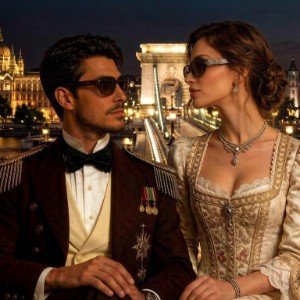
Császári főváros fényében,
Hol szívünk mindig szerelemben élt,
Szól a dal, mint édes álom,
Duna-fánál keringőn.
Utca elegáns, teli bájjal,
Tánc, pillantás, koszorú lágy,
Nevet a fiatalság, a világ oly tág,
Mese a régi időkből.
[Pre-Chorus: The dynamics are increasing a bit. The string section is strengthening, the wind instruments are becoming more expressive, and the music has a premonition of an impending storm of emotions. Pipes with a light but noticeable sound are added.]
Ó, hallgasd az arany éj hangját,
A vágyat, mi szívünkben ébred!
[Chorus: Here the full power of the orchestra is revealed. The strings play in unison, creating a wide, flowing melody. Brass wind instruments (French horns, trumpets) are added, adding grandeur. The violin leads the main melodic line, performing it with special passion and lyricism.]
Osztrák-Magyar Birodalom, te vagy az álmom,
Keringő ritmusán, szerelem tág terén.
Hegedű szól, muzsika zeng,
Dal, mi örömet hoz, örökké!
[Verse 2]
Kávéházban édes bor illata,
Hölgyek ragyognak, tiszták, finomak.
Frakkos úr, kalapja oly pompás,
Flört kezdődik, egy pillanat.
Utca csillog, fények tengere,
Szép volt az idő, szívünk oly nehéz,
De a dallam megmarad,
Szívünkben él tovább.
[Pre-Chorus]
Dallam, oly gyengéd és tiszta,
Emlékeztet, hogy voltunk régen!
[Chorus]
Osztrák-Magyar Birodalom, te vagy az álmom,
Keringő ritmusán, szerelem tág terén.
Hegedű szól, muzsika zeng,
Dal, mi örömet hoz, örökké!
[Verse 3]
Ég rózsaszínnel festve,
Holdfényben utolsó tánc.
Az idő múlik, de sosem tűnik el,
Mi szívünk mélyén tovább leng.
Így szól az operett, oly finoman,
Régi dallamok hangjain.
Köszöntés annak az aranykornak,
Szerelem él örökké.
[Pre-Chorus]
Keringőben, oly könnyedén, szabadon,
Szól a nosztalgia!
[Chorus]
Osztrák-Magyar Birodalom, te vagy az álmom,
Keringő ritmusán, szerelem tág terén.
Hegedű szól, muzsika zeng,
Dal, mi örömet hoz, örökké!
[Bridge: The music slows down, becomes more thoughtful and intimate. Solo cello or oboe, conveying deep nostalgia. The harmony becomes more complex, with dissonances that resolve into warm chords. Ad-libs.]
Elfeledett dalok táncolnak, szállnak,
Emlékek, melyek szívünkben élnek.
Tegnap visszhangja, gyengéd lehelet,
Vágy a szépre, csendes szokás.
[The Chardash Interlude: The orchestration changes dramatically. The tempo accelerates, the rhythm becomes more pronounced, characteristic of the chardash. The emphasis shifts to percussion (drums, cymbals) and virtuoso violin passages. The violin part becomes playful, incendiary, with characteristic tremolos and rapid movement along the strings. This section should be really spectacular and explosive, showcasing the dance energy!]
[Final Chorus: It's performed with maximum expression! The melody sounds solemn and a little melancholic at the same time. The violin can add the last, sparkling notes, and the orchestra completes with a powerful, but at the same time a little sad chord, leaving a sense of lost beauty in the air. Ad-libs.]
Osztrák-Magyar Birodalom, te vagy az álmom,
Keringő ritmusán, szerelem tág terén.
Hegedű szól, muzsika zeng,
Dal, mi örömet hoz, örökké!
Osztrák-Magyar Birodalom, te vagy az álmom,
Keringő ritmusán, szerelem tág terén.
Hegedű szól, muzsika zeng,
Dal, mi örömet hoz, örökké!
Igen, örökké hoz örömet!
Húú!!!
[Outro Orchestral/Coda]